Off-plan · 10 min read
How to Refinance a Post-Handover Payment Plan into a Mortgage
 Sarah ChohaibAuthorPublished 15 October 2026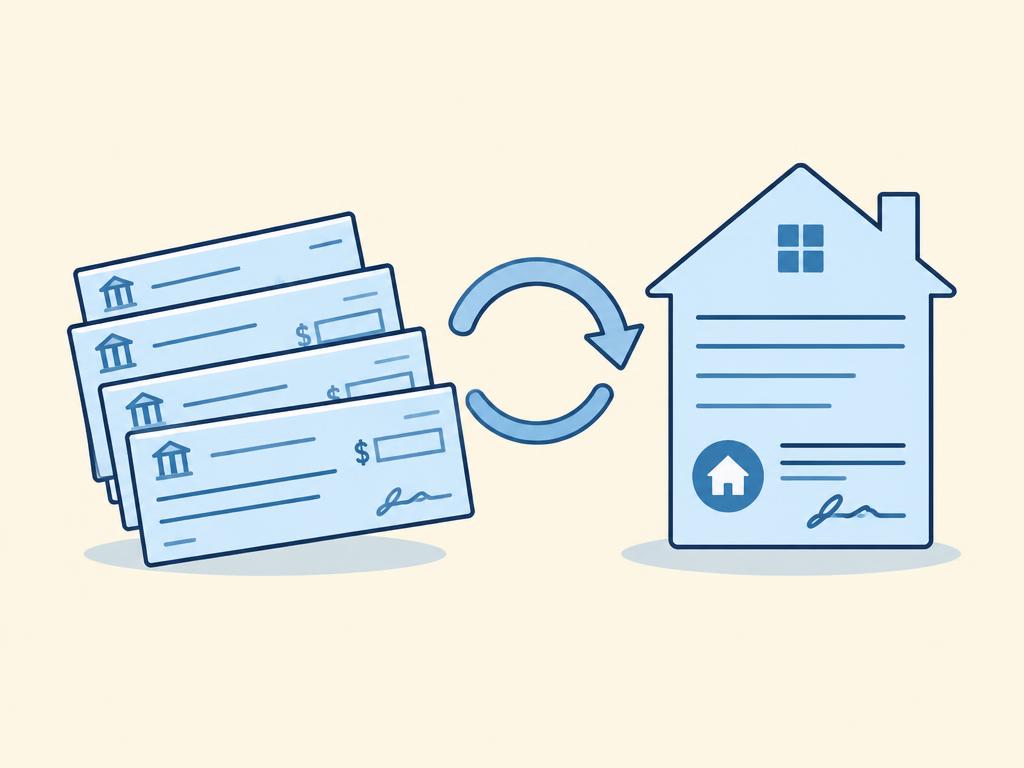
You can refinance post handover payment plan instalments by having a bank pay out the remaining balance owed to the developer and registering a mortgage in its place, known as a developer payment plan buyout. This typically needs the title deed to be issued, an outstanding balance confirmation from the developer, and a property valuation. Indicative rates start near ENBD's 3.89% fixed, with LTV commonly capped around 60% on these cases, hedged against your resident status and the bank's policy.
Why buyers refinance a post-handover payment plan
A post-handover payment plan lets a buyer keep paying the developer in instalments after moving in, rather than paying the full balance at handover. Over time, some buyers decide to refinance post handover payment plan instalments into a single bank mortgage instead — usually because the developer's remaining schedule is shorter or less flexible than they'd like, because they want a lower effective cost than the developer's embedded pricing, or because they want one predictable long-term payment rather than several remaining lump sums. This is distinct from financing at handover itself, which our handover mortgage Dubai pillar guide covers; this article is specifically about switching an existing post-handover plan to a mortgage partway through.
What a developer payment plan buyout involves
A developer payment plan buyout is the mechanism banks use to take over the remaining balance. The bank pays the developer the outstanding amount directly, the mortgage is registered against the property with the Dubai Land Department, and the buyer's future payments go to the bank instead of the developer. For this to happen, the property generally needs a title deed already issued (post-handover, since DLD issues title once a project completes and registers), because banks register mortgages against titled units, not against Oqood interim registrations.
| Step | What happens | Typical requirement |
|---|---|---|
| 1. Request outstanding balance letter | Developer confirms amount still owed | Written, dated letter from developer |
| 2. Property valuation | Bank values the unit independently | Bank-appointed valuer, cost borne by buyer |
| 3. Credit and income assessment | Bank checks DBR and eligibility | Salary certificate, bank statements, liabilities |
| 4. Offer letter and approval | Bank issues indicative then final offer | Signed acceptance |
| 5. Settlement and registration | Bank pays developer, mortgage registered | 0.25% mortgage registration fee |
Convert payment plan to mortgage: costs to expect
When you convert payment plan to mortgage, expect a property valuation fee, the 0.25% mortgage registration fee on the new mortgage, and potentially an early settlement charge if the developer plan itself counts as a form of finance with exit terms (check your SPA — this varies by developer and is not the same as the bank early settlement cap). If you're separately coming off an existing bank mortgage into a new one, Central Bank of the UAE rules cap early settlement charges at 1% of the outstanding balance or AED 10,000, whichever is lower; that cap does not automatically apply to a developer's own payment plan terms, so read your SPA's exit clause carefully.
| Item | Illustrative amount | Notes |
|---|---|---|
| Outstanding developer balance | AED 800,000 | Confirmed via developer letter |
| Mortgage registration fee (0.25%) | AED 2,000 | Paid to DLD on new mortgage |
| Valuation fee | AED 2,500–3,500 | Varies by bank/valuer |
| Indicative rate | 3.89% fixed (ENBD baseline) | Other banks typically +0.05–0.10% |
How much you can borrow for a buyout
Lenders apply the same debt-burden ratio cap of 50% of gross income across all your obligations, and loan-to-value limits that are typically lower for second properties or units originally bought off-plan — often around 60% of current valuation, compared with up to 80% for a resident's first home under AED 5 million. If the property has appreciated since purchase, the bank's valuation (not your original purchase price) generally determines how much can be borrowed, which can work for or against you depending on market movement. Use a mortgage eligibility calculator UAE or how much can I borrow UAE tool to estimate your position before applying.
Buyout vs staying on the developer plan
Compare the developer's remaining schedule and any implicit cost against a bank mortgage's fixed rate and fees before switching. Our post handover payment plan Dubai comparison lays out this trade-off in more depth, and is worth reading alongside this guide if you haven't yet decided whether a mortgage is the right move at all. If you originally bought off-plan and are now considering your options post-handover, our Dubai off plan property guide covers the earlier stages of that journey.
Non-residents and buyout eligibility
Non-resident owners can generally pursue a developer payment plan buyout too, subject to the lower LTV caps and documentation that apply to non-resident lending generally. See our non-resident mortgage UAE guide for the broader eligibility picture, since not every bank active in buyouts also serves non-resident applicants.
Refinancing an existing mortgage vs a developer buyout
If you already have a bank mortgage rather than a developer plan, the process you want is a standard mortgage refinance UAE or mortgage buyout UAE between banks, not a developer payment plan buyout — the mechanics and fee caps differ because the Central Bank's early settlement cap applies to bank-to-bank mortgage refinancing, not to developer contract exits.
How Lenddoo helps
Lenddoo compares indicative offers from 18+ UAE banks for developer payment plan buyouts at handover and beyond, with AED 0 broker fees, so you can weigh a buyout against staying on the developer's schedule with real numbers rather than guesswork. Get an indicative comparison before your next instalment is due.
Run the numbers on your own case
Free Lenddoo tools and guides related to this article.